When you click the link, it will take you to the corresponding page.
ゴマサバ・串盛り・ステーキコース
シーザーサラダ
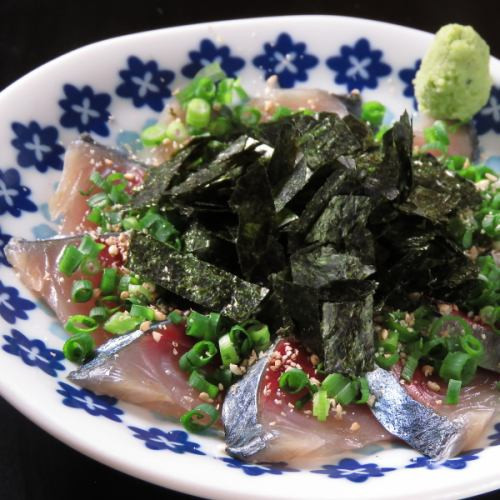
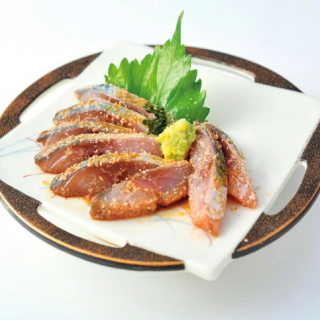
ゴマサバ
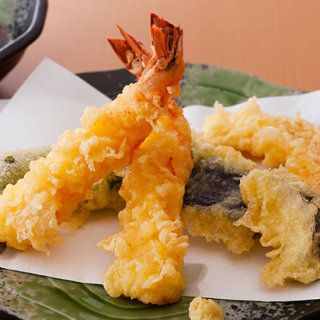
帆立天ぷら
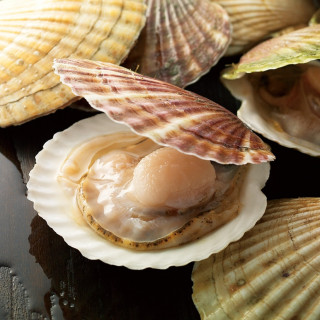
Scallops, known as "Hotate" in Japanese, are prevalent seafood in Japanese cuisine. They are commonly found in sushi restaurants and Japanese cuisine establishments. Scallops are typically consumed raw or lightly grilled and served with sushi rice or wrapped in nori (seaweed). They can also be prepared as sashimi or sushi rolls. Although they are commonly referred to as "scallops" (the standard Japanese term is "Hotategai"), the term specifically refers to the muscular part of the scallop known as the "Hotatehashira." The word "Hotate" (帆立) has an interesting origin. According to records, in a Japanese encyclopedia from the 17th century, the appearance of a scallop with its shell open and moving resembled the image of a sailing ship with its sails unfurled, hence the name. The "ho" (帆) in Japanese represents a sail, and "tate" (立) represents standing or upright. Additional notes: Scallops can also be enjoyed pan-seared with butter, and during travels in Hokkaido, dried scallop muscles are popularly purchased as souvenirs and snacks. In 1856, scallops were given the scientific name "Mizuhopecten Yessoensis" by an American, with the first part representing the scallop genus and the latter part "Yessoensis" referring to the comb-shaped clams found in the Hokkaido region of Japan. It was named based on the resemblance between the ribbed muscles of scallops and the shape of comb clams. Scallops have also appeared in Western art history, as depicted by the Renaissance painter Sandro Botticelli in his artwork "The Birth of Venus." The goddess of love and beauty, Aphrodite, is depicted standing on a large shell, which is a scallop. When scallops move in the sea, they do not open their shells and physically move, as the name might suggest. Instead, they propel themselves by taking in water with their open shells and then forcefully expelling it. The same is true for the tongue of a geoduck clam. Throughout history, people have often named animals based on their own interpretations.
Tempura is a dish where ingredients are coated with a batter made of flour, eggs, and water, then deep-fried. It is one of the signature dishes of Japan. Often, the word "ten" is added after the name of the ingredient, such as "shrimp tempura" becoming "shrimp ten", "eggplant tempura" becoming "eggplant ten", and "fish cake tempura" being called "fish cake ten". Originally, tempura was a street food sold by vendors, but now it's commonly found in supermarkets and side-dish stores. It's also a popular homemade dish. However, the rise of high-end tempura restaurants and its inclusion in luxury Japanese dining (known as "Ryotei") has elevated its image. While seafood, vegetables, and mushrooms are traditional ingredients for tempura, nowadays various other ingredients like cheese, soft-boiled eggs, and bananas are also used. When eating tempura, it is commonly dipped in a soy-based sauce called "tempura sauce" or salt. Some might add grated radish to the sauce, or sprinkle lemon or yuzu directly onto the tempura for a refreshing taste. There are various flavored salts available such as matcha salt, yuzu salt, and curry salt.
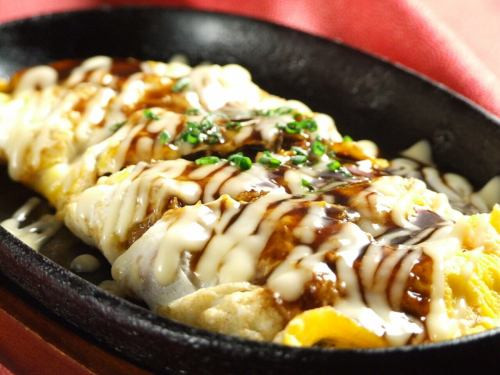
明太チーズとんぺい焼き
串盛り
本日のおすすめ
いかバター焼き
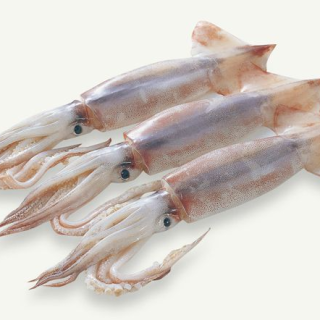
The Japanese name is cuttlefish イカ. It is used in various dishes such as sashimi, sushi, deep-fried, grilled, etc. Squid is indispensable in the grid of sushi. The origin of the Chinese character "squid烏賊" is a story recorded in the ancient Chinese book Nanyue Zhi. It originated from the story of a crow approaching a squid pretending to be dead and floating on the sea. The squid wrapped its legs around the crow and dragged it into the water. But, in the ecosystem, squid predation on crows has not been confirmed. Therefore, a saying is also that "烏black" is used only when squid ink is black. Types of squid commonly used in Japanese cuisine include: Yariika槍烏賊Arrow Squid, Surumeika鯣烏賊Japanese flying squid, Kensakiika剣先烏賊spear squid, Aoriika障泥烏賊patterned squid, Hotaruika蛍烏賊firefly squid, Kouika甲烏賊Giant Squid, and Mongoika 紋甲烏賊Flamboyant cuttlefish.
サイコロステーキ
広島風モダン焼き